

Plan when to claim, instead of guessing
When to claim Social Security is one of the biggest decisions in retirement. With a full retirement age of 67, claiming at 62 pays about 30% less for life, and waiting until 70 pays 24% more. Which is right for you depends on the rest of your plan.
In Ready Aim Retire you enter one number from your Social Security statement. Your plan works out the benefit at every claiming age, and shows you what each one does to your savings.
Plan Your Social Security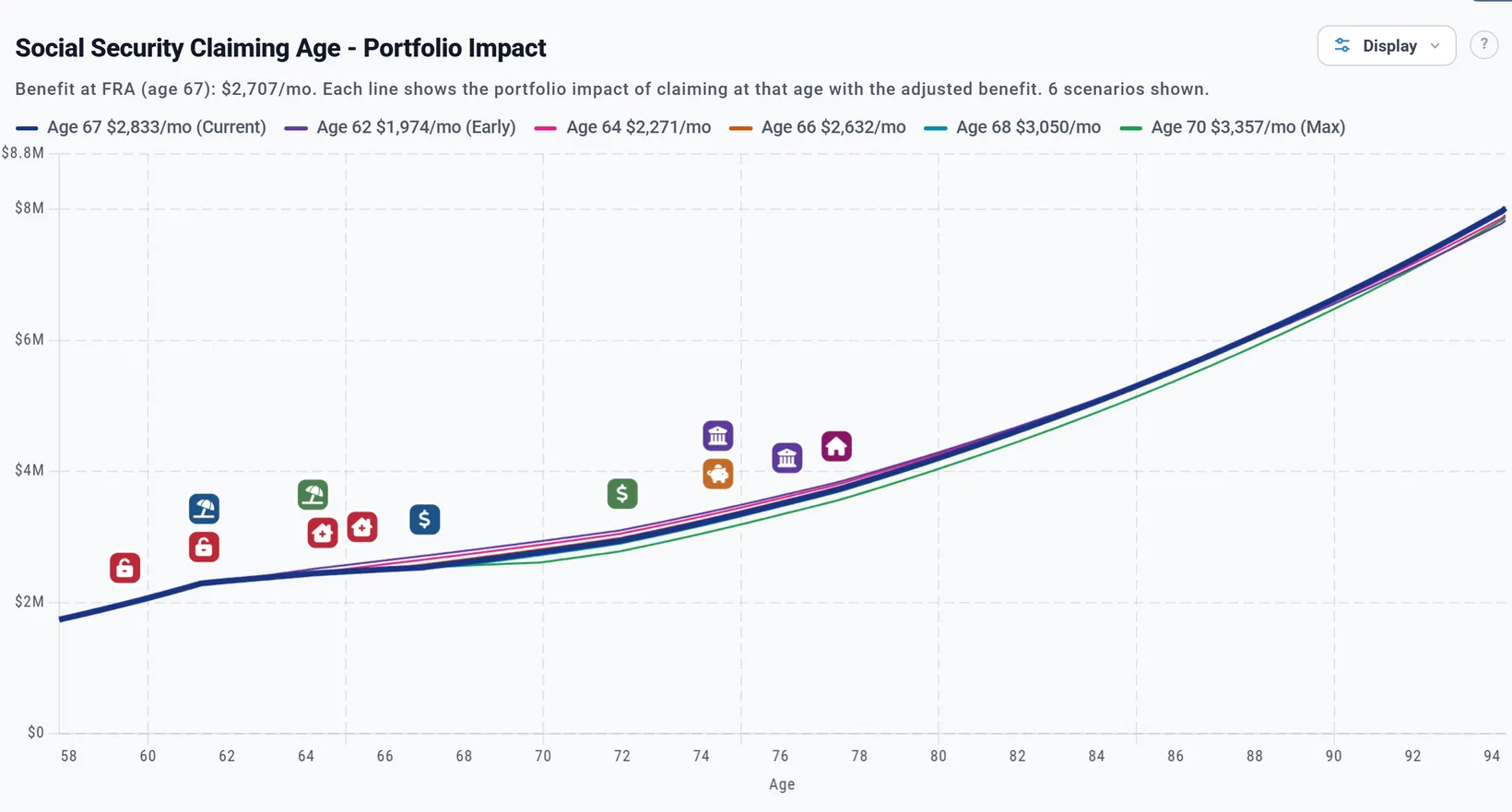
Chris's savings with Social Security claimed at six different ages. Chris and Jamie are a made-up couple we use in our examples.
Copy your monthly benefit at full retirement age from your Social Security statement at ssa.gov. It is in today's dollars, and it is the only amount you type. The box works out the rest.
As soon as you enter it, you see:
Statement only shows an estimate at 62 or 70? Enter that instead, and the box works back to your full-retirement-age amount. Already collecting, or on disability benefits (SSDI)? The box handles those too: SSDI is paid from your plan's first month, at the amount on your benefit letter.
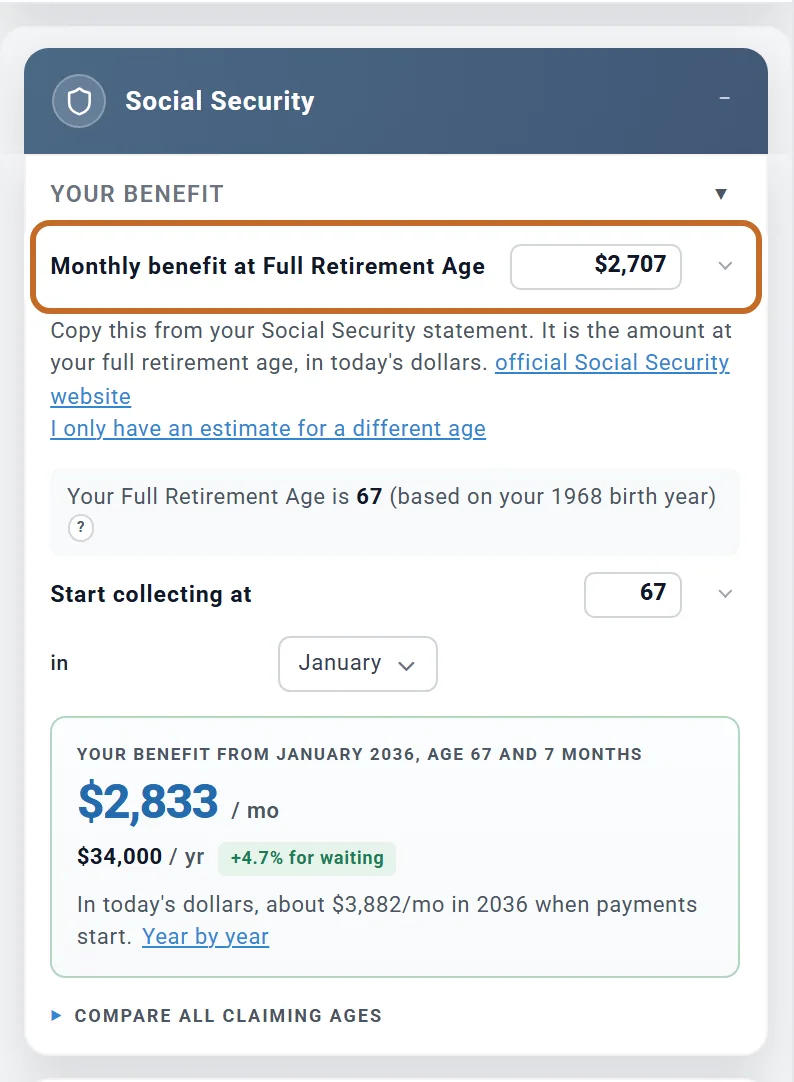
Chris's Social Security: one amount, a claiming age and month, and the result.
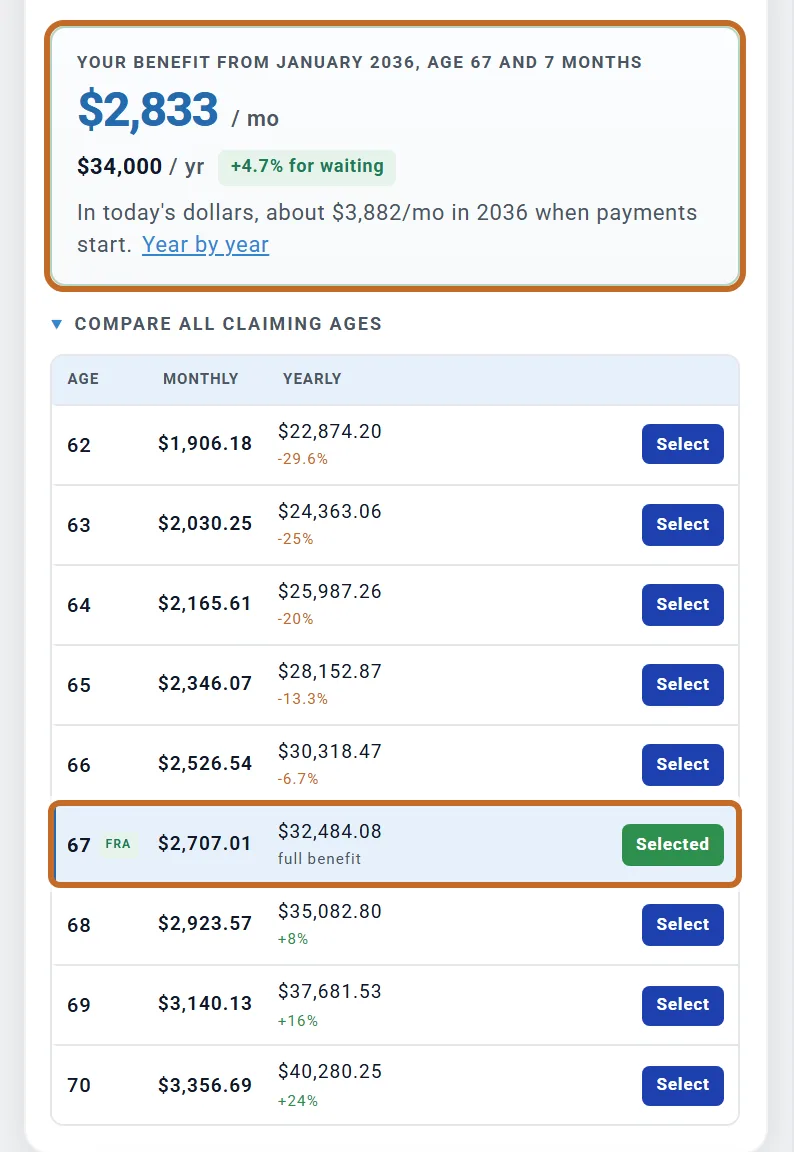
Every claiming age for Chris, from 62 to 70.
Change when you start collecting and the amount updates right away. Then look at every age side by side.
Your claiming age is its own setting, separate from the age you retire. The Learning Library's When to Claim Social Security guide explains full retirement age, break-even ages and the trust fund, worked out with your own plan, and the Coach reminds you as your claiming age comes near.
Each January your plan raises your benefit by its inflation over the past year, including the years before you claim. So the amount you typed in today's dollars has grown by the time you start.
Current projections suggest the Social Security trust fund may run short around 2034, which could mean a cut of about 23% unless Congress acts.
One optional setting shows your plan with lower benefits. Choose the year the cut starts and its size, and every payment from then on is lower, including a claim that starts later. For a couple, set it for each of you.
Before full retirement age, Social Security holds back $1 of benefits for every $2 you earn above a yearly limit ($24,480 in 2026), and pays it back later as a higher benefit.
The plan does not model the holdback. It warns you instead, under your result and on your Summary, so you know your early checks may be smaller than shown.
Each of you has your own Social Security box, on your own birth date: your own full retirement age, claiming age and month.
The survivor benefit is an estimate: it is reduced if the survivor is younger than their own full retirement age, and you cannot choose when the survivor claims.
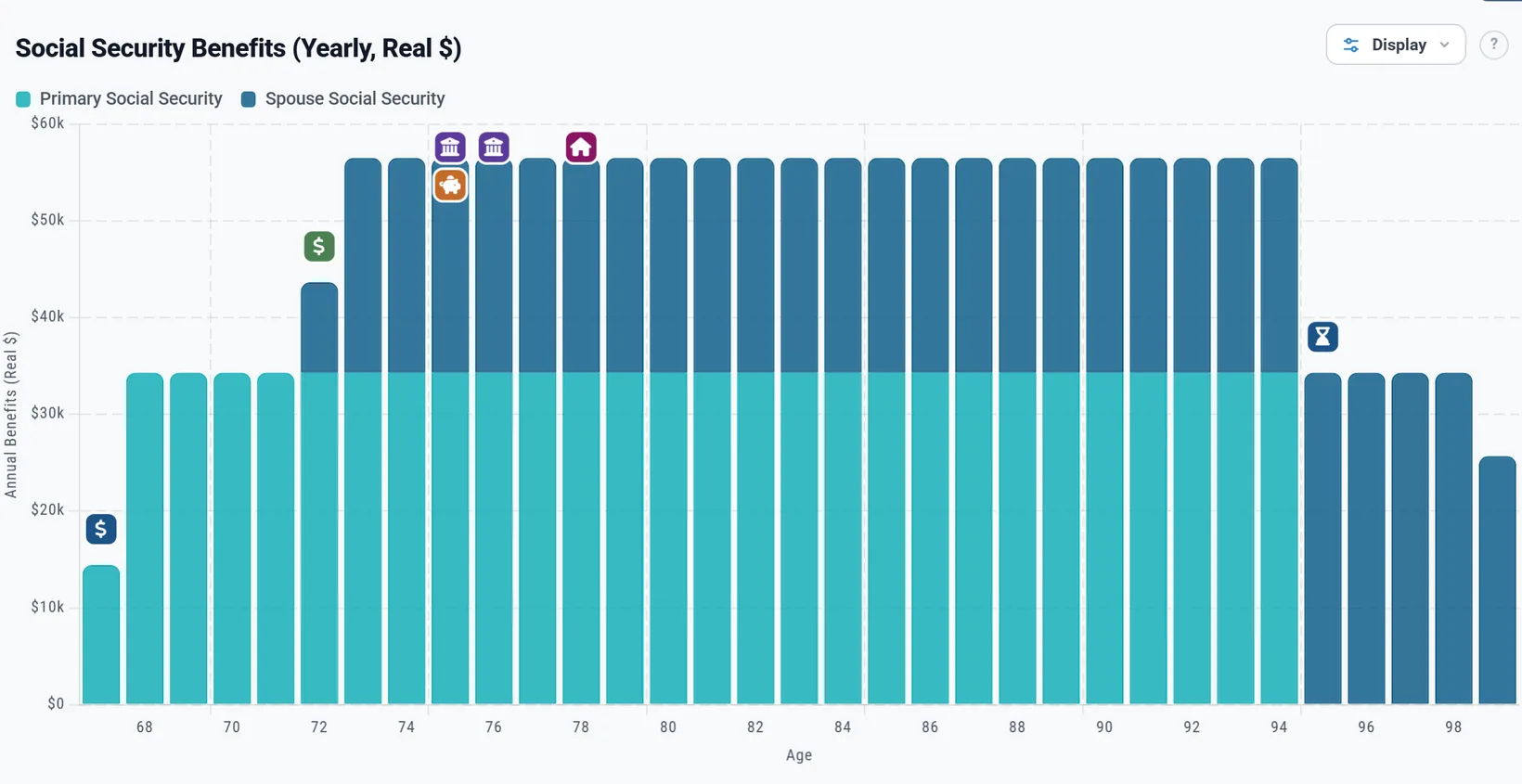
Chris and Jamie's Social Security in today's dollars. After Chris dies at 95, Jamie gets Chris's larger benefit: $34,315 a year instead of Jamie's own $22,204.
The tax is paid with the rest of the year's taxes, as part of your plan.
Set your location to Canada or the UK, and your plan offers your country's government pension in place of Social Security, one for each of you.
There is no spousal top-up or survivor benefit outside the US: when one of you dies, their payments stop.
Your plan uses the amount you enter and your own assumptions. It does not model the earnings test holdback, a lower benefit if you stop working before you claim, claiming strategies beyond one claim each, or benefits from a former spouse. Check your figures at ssa.gov. Ready Aim Retire is an educational tool, not financial or tax advice.
Searches withdrawal orders and Roth conversions for a better strategy.
Pay for retirement in the order that keeps more of your money.
Your plan in plain English, and what is worth a look next.
Your plan replayed through real market history since 1871.
Every year of your plan, and the milestones that shape it.
See your financial progress clearly and over time.