

Plan for health insurance before 65, and Medicare after
Health insurance is the cost most early-retirement plans leave out. Retire before 65 and you buy your own coverage. In 2026 the enhanced subsidies expired and the 400% income cliff is back, so a few extra dollars of income can cost you thousands in lost premium tax credits.
Turn on the Health Care box and your plan prices the marketplace premium and the tax credit your income earns, every year, for each of you, until Medicare takes over. From then on, Medicare premiums and IRMAA surcharges are charged automatically, and an HSA can pay them.
Start Planning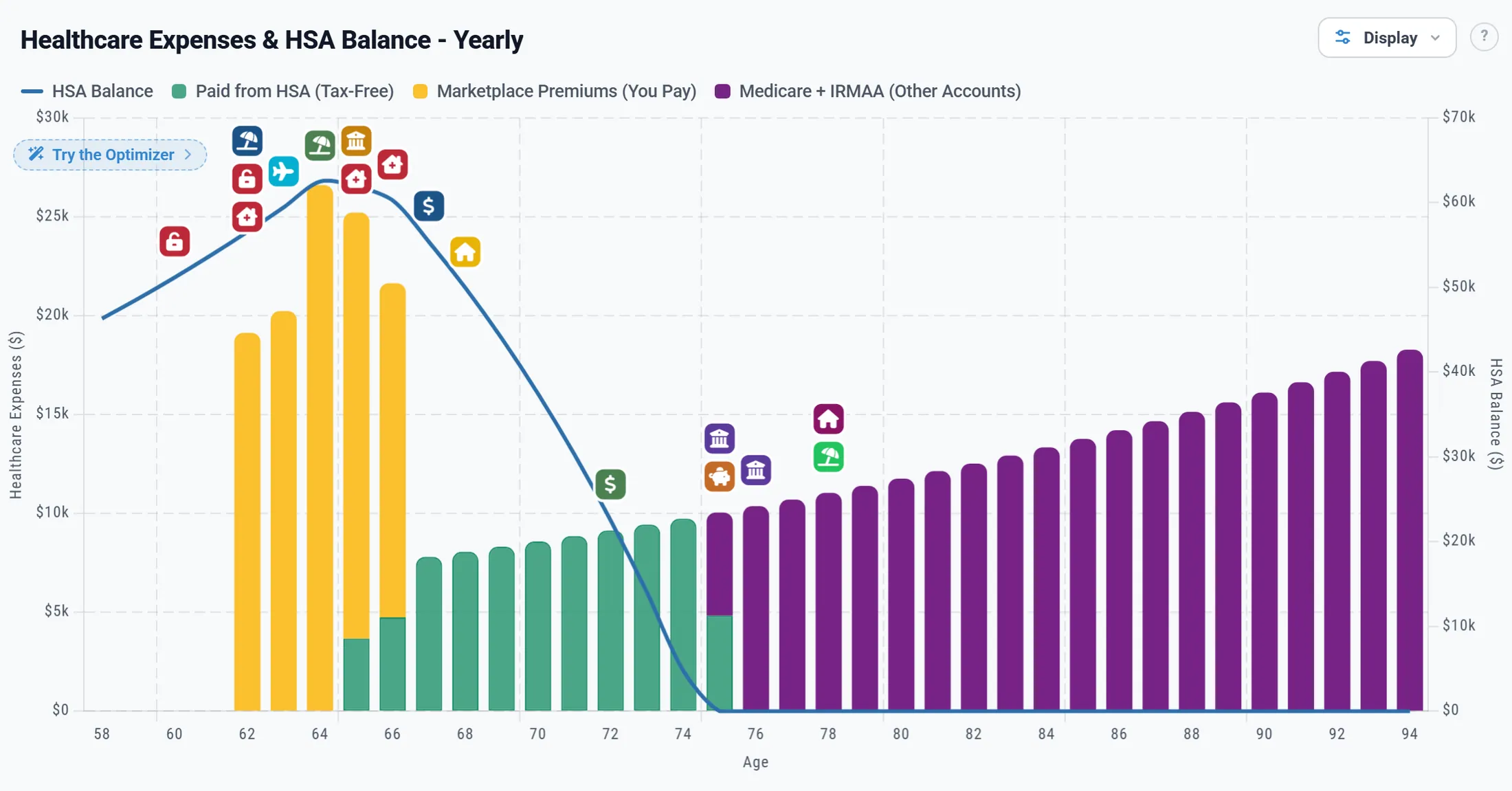
What Chris and Jamie, a made-up couple we use in our examples, pay for health insurance each year: marketplace premiums from 62, then Medicare, paid by their HSA until it runs dry and by their other accounts after that.
Switch on Model ACA premiums and subsidies in the Health Care box. Each of you is then charged a marketplace premium from your own retirement until the month before your 65th birthday, less the premium tax credit your income qualifies for. A person still working is assumed to have coverage from work.
Every year, for each of you, the plan works out:
The income that counts includes pre-tax withdrawals, Roth conversions, realized gains, interest, dividends and all of your Social Security. Spending cash, or money from a Roth account, does not. The Learning Library's interactive guide, Health Insurance Before Medicare, shows where one extra dollar can cost thousands, starting from your own plan.
When your income crosses the subsidy line, the Coach flags it and points you to the Optimizer's ACA subsidy limit target, so you can see whether staying under the line is worth it.
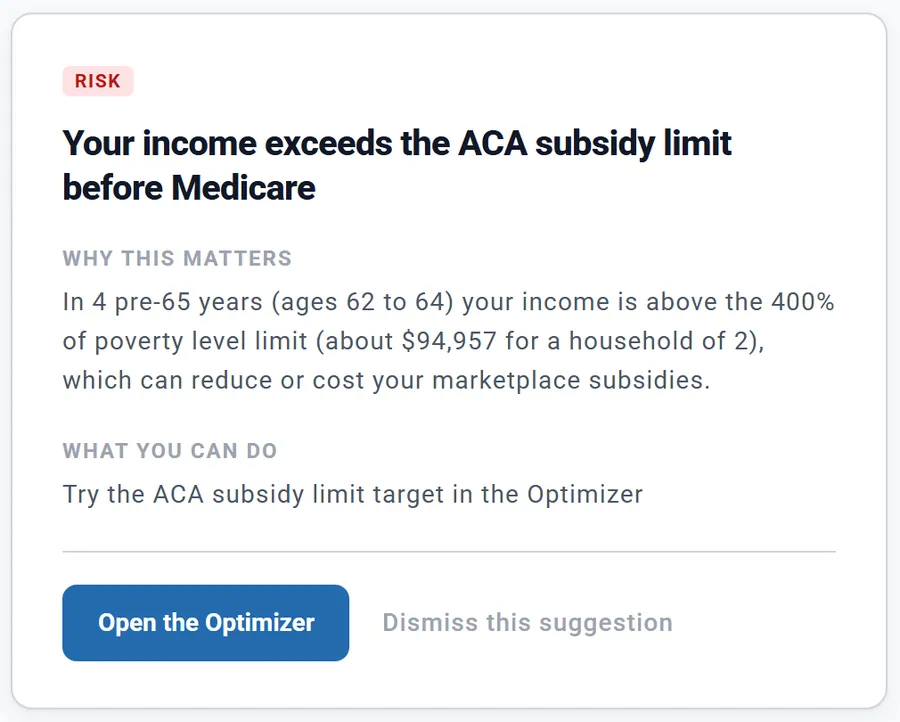
The Coach caught Chris and Jamie's subsidy cliff: four years before Medicare with income above the line.
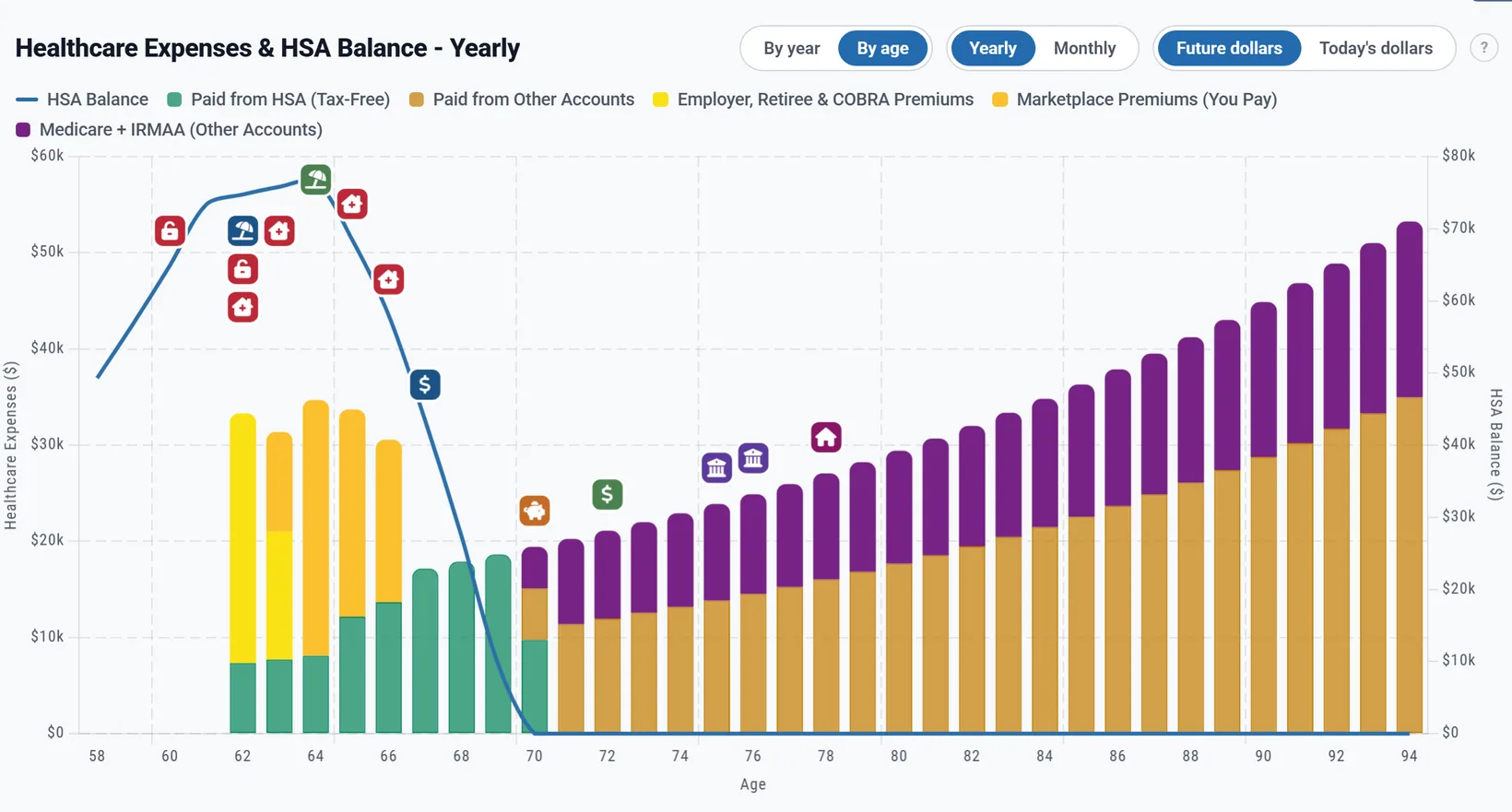
Chris and Jamie's health costs with COBRA first, then the marketplace, then Medicare.
Not everyone goes straight to the marketplace. Under Retiree and COBRA coverage, add up to two arrangements, each with who it covers, the type of plan and one monthly premium in today's dollars.
For a plan you keep with Medicare, choose the Medicare parts it works with, enter any Part B amount it pays back, and set how much faster than inflation its premium rises. A line under each arrangement confirms the dates in plain words.
For each of you, the Medicare Part B premium and the base Part D premium are charged from the month of your 65th birthday, rising with your plan's inflation. There is nothing to switch on.
To stay under a tier, the Roth Conversions box can fill conversions up to the IRMAA threshold.
Staying on an employer plan past 65, your own or a working spouse's? Set the age Medicare actually starts for that person. Until then the plan charges them no Medicare premium and no IRMAA.
Medicare can also start before 65, after 24 months of Social Security disability benefits, or with kidney failure or ALS. Enter that age, and from then the plan charges Medicare, ends that person's marketplace coverage, and stops their HSA contributions.
Have a health savings account? From its owner's 65th birthday it pays your Medicare premiums, your spouse's too, tax-free, in months the plan would otherwise draw on your investments.
Add the HSA box for more control: healthcare spending paid from the HSA in retirement at its own healthcare inflation rate, contributions up to the yearly limit, and when they stop.
The planner charges the standard Medicare premiums. Add these to your spending or your budget:
Premiums the planner charges are paid on top of your spending, so keep them out of your spending and budget to avoid counting them twice. New to Medicare? Read our Medicare 101 guide.
Marketplace coverage, Medicare, IRMAA and the Health Care and HSA boxes are for US plans only.
Planning somewhere else? Add health insurance, care and out-of-pocket costs to your spending or your budget. In Canada, the Ontario Health Premium is included in Ontario provincial tax.
The planner charges the benchmark marketplace premium less your estimated credit, and the standard Medicare premiums. The plan you choose, where you live and each year's rules will change what you really pay. Marketplace and Medicare modeling is for US plans. Ready Aim Retire is an educational tool, not tax, insurance or investment advice.
Every account, home and loan, together in one living model.
Turn your lifestyle into a spending plan that lasts.
How much to save, and which accounts it should go to.
Your plan in plain English, and what is worth a look next.
Your plan replayed through real market history since 1871.
Every year of your plan, and the milestones that shape it.